
Ho Chi Minh City / Saigon - Vietnams largest city
Ho Chi Minh City, or Saigon as it is still known, is Vietnam’s biggest and most turbulent city. The city is home to over 12 million people, including an estimated 6 million scooters and motorcycles. The pulse is high, and glass and metal buildings rise over everything like toadstools. But there is something romantic about disorder, and it appears like the old Saigon has ridden into the future on a gleaming new motorcycle.
Ho Chi Minh City is Vietnam’s gateway, and here tradition coexists with modern influences. This is where you’ll see high-rise skyscrapers practically blending into French colonial villas, and the cityscape is adorned with conical rice hats alongside hip-hop caps.


Saigon’s history was written long before the American army arrived, and all one has to do is visit the Jade Emperor Pagoda, built by the Chinese in 1909, or the central post office, built in grand French architecture, to get a glimpse of all the mosaic pieces that make up the city’s story.
Whatever you desire, this magnificent metropolis can provide. Whether you want to shop cheaply at the market or acquire measurements for custom-made clothing. You can enjoy a martini with a skyline view or satisfy your thirst with a fresh beer on one of the quiet side streets.
In 1862, the French acquired control of Saigon, which became the capital of the French colony of Cochinkina. The city began to flourish and develop under French influence, and a number of colonial-style structures were constructed, earning it the nickname “Paris of the Orient.” Following the conclusion of WWII, Saigon remained the capital of the French territory of Cochinchina.
Shopping in Ho Chi Minh City
Ho Chi Minh City is every shopper’s dream. There are shops on the ground floor of almost every building, and there are plenty of markets and modern shopping centers spread across the city.
Ben Thanh market
Located in District 1, this is the most well-known market, albeit it is somewhat touristy, and you must be a strong negotiator to avoid overpaying. The market includes a fantastic street food sector, with numerous little stalls selling a wide variety of Vietnamese foods for extremely low prices.
Saigon Square
Saigon Square, located in District 1, is a massive market for shoes, clothing, purses, and numerous technological items. Is well-known for producing high-quality copy items at low prices.
Sence Market
Located in District 1. The market is located in the park’s basement, designated 23/9. The market provides the same selection as Saigon Square, albeit not as large, and it shares space with several small food stalls that serve Asian cuisine.
The market has air conditioning, making it ideal for shopping during the hotter hours of the day.
China Town
Chinatown is a major neighborhood in District 10 that mostly sells in large quantities to merchants throughout the city. An location with a thriving community that will leave you with unforgettable memories.
Shopping centre
There are countless shopping centers in the city. The best include Parkson, Vincom and Diamond Plaza.
Where to eat in Ho Chi Minh?
Ho Chi Minh provides an incredible variety of culinary cultural experiences, from traditional Vietnamese street food to 5-star French-inspired banquets.
Vietnam travel recommends:
- Mad House in D2: Danish award-winning restaurant in a cozy courtyard environment.
- Caravelle Hotel: Large sumptuous buffet in D1
- Sence market: Market with a lot of food stalls with Asian food
Street-food tour and other food experiences with Vietnam Travel

What to see in Ho Chi Minh City?
There are numerous sights to see in Ho Chi Minh, and most people are pleasantly pleased by the city’s offerings. Most visitors to the city take the typical city tour (link to city tour), which begins at the Cu Chi tunnels and continues to the war museum, the old French post office, and the cathedral before terminating at the old South Vietnamese presidential palace. A speedboat can also be used to travel to the Cu Chi tunnels, allowing you to experience both the Saigon River and the Mekong Delta.
French architecture tour
The city has numerous historic attractive structures from the French era, like the Museum of Modern Art, which was once the private mansion of one of Vietnam’s greatest traders, and the Gustave Eiffel-designed footbridge between D1 and D4. Also designed the Eiffel Tower in Paris.

Landmark 81
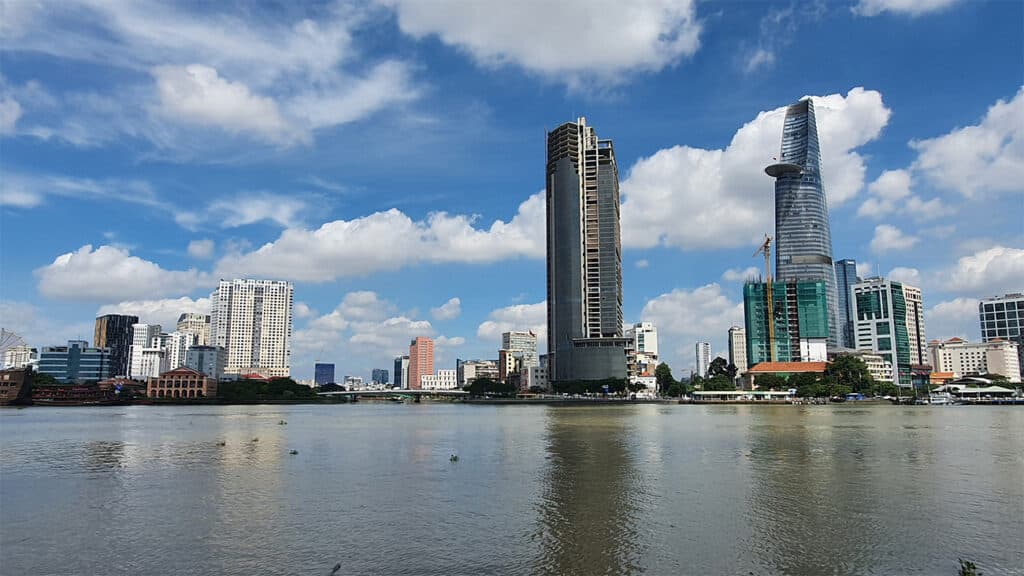
Landmark 81 is Vietnam’s newest skyscraper, and with 81 stories, it presently ranks 14th among the world’s highest skyscrapers. It is possible to ascend to the higher levels, much as it is in the Bitexco building in D1, and enjoy a stunning perspective of the city.
Bitexco can be seen in the photo.
Parks and the river
If you want to go for a few walks, simply chalk your shoes and go. We will discuss Tao Dan Park in D1 and then take a trip along the river that separates D1 and Phu Nhuan Districts. The river winds through the city, with sidewalks leading down to it and coffee shops on both sides.
Ho Chi Minh for children
If you have children with you and they need some entertainment, there are enormous playgrounds, arcades, and ice rinks in almost every shopping center, or you may take a taxi approximately 10 km to Suoi Tien Amusement Park in District 9 (particularly for kids aged 4 to 12).
Experiences in and around Ho Chi Minh City
Here are some of the top activities available in Ho Chi Minh City and nearby areas.
It is possible to see and experience the Cu Chi Tunnels, a network of over 500 kilometers of tunnels used by the Viet Cong during the Vietnam War. You can even get lost in Chinatown, which is a maze of temples, eateries, and medical stores.
Visit the Vietnam History Museum, which is an excellent venue to learn about Vietnam’s colorful history. The museum has an extensive collection of ceramics, firearms, and cannons. Photographs, clothing, and household objects date back to the 18th century.
The Cantonese people built the Jade Emperor Pagoda in 1909, making it one of the city’s most appealing pagodas. Dedicated to a variety of Sino-Vietnamese deities in Taoist and Buddhist forms.
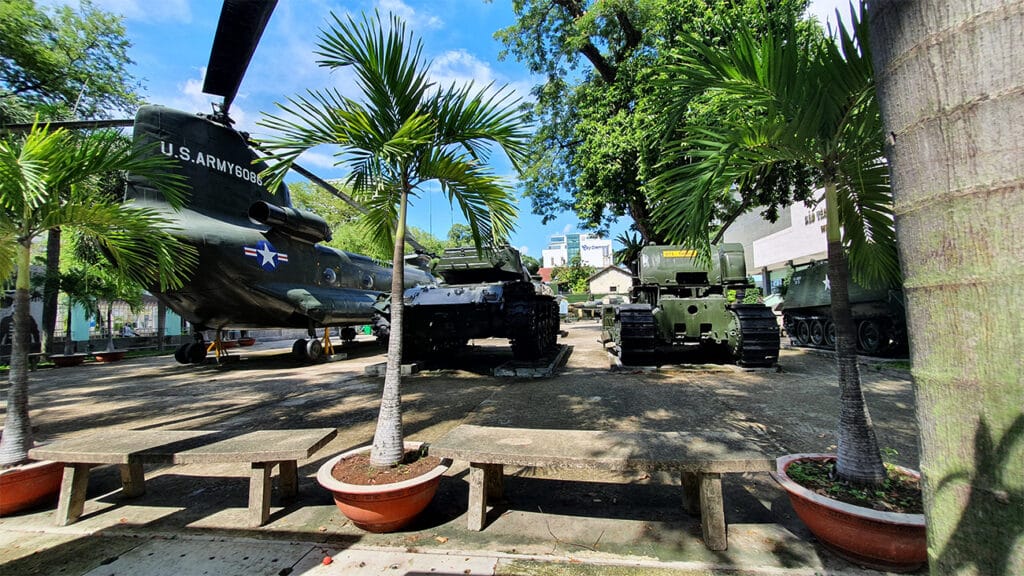
Visit the War Remnants Museum, which displays torture equipment and hundreds of images depicting atrocities done in the twentieth century, particularly during the Vietnam War. At the entrance of the museum is a small collection of military gear, including tanks and planes, as well as, perhaps most interestingly, the mobile guillotine used by French colonists to deliver justice around the country prior to WWII.
Shop in Ben Thanh Market – Although the market is crowded, it’s the best location to find a deal or eat some traditional (and inexpensive) Vietnamese cuisine.
The Saigon Skydeck, an observation platform on the Bitexco Financial Tower, which stands 262 meters tall, is a recent addition to the city’s attractions. The glass and steel skyscraper, inspired by the shape of a lotus bud (Vietnam’s national flower), represents the new Vietnam. The 49th story provides a beautiful perspective of the city and the Saigon River.
Ho Chi Minh City is the “naughty boy of the class” when compared to its capital, Hanoi. This is where you can locate the most clubs, bars, and discotheques. Bui Vien Street, located in the heart of District 1, appears to never sleep and attracts many visitors, particularly backpackers, with its pubs, live music, and cheap cuisine.